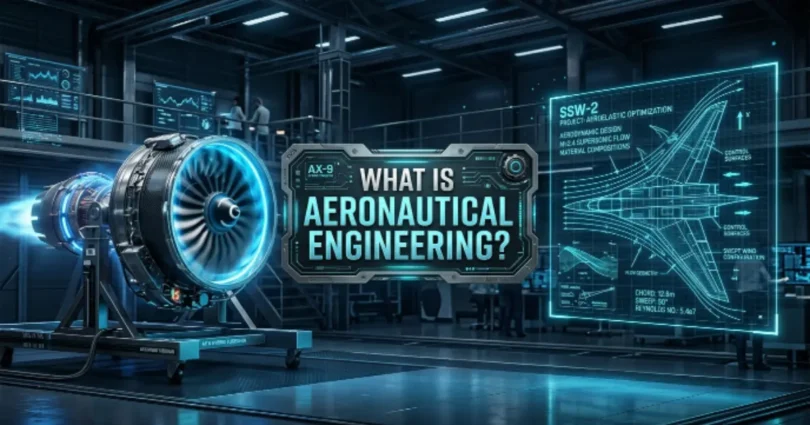
Aeronautical engineering is the study of how aircraft are designed, built, and made to fly safely. It is a field that connects science, math, and creativity to shape airplanes, helicopters, and even modern drones. When people ask what is aeronautical engineering, the simple answer is that it is all about understanding flight and improving how flying machines work.
If you are curious about how planes stay in the sky or how engineers make travel safer and faster, this field gives you all the answers. What is aeronautical engineering also helps us understand the technology behind airports, aircraft systems, and space-related research. It is an exciting career path for students who enjoy problem-solving and want to work in the world of aviation.
What is Aeronautical Engineering?
Aeronautical engineering is the branch of engineering that focuses on the design, development, testing, and maintenance of aircraft. It deals with how flying machines work and how they can be made safer, faster, and more efficient.
Clear Definition in Simple Words
Aeronautical engineering means working on aircraft like airplanes, helicopters, and drones. It combines science, math, and technology to understand flight.
- It studies how aircraft fly in the air
- It focuses on making flights safe and smooth
- It uses science to improve aircraft performance
- It helps in building better aviation systems
What Aeronautical Engineers Actually Do
Aeronautical engineers work on both designing and improving aircraft systems. They also test machines to make sure everything works correctly.
- They design aircraft shapes and parts
- They test aircraft performance and safety
- They solve problems in flight systems
- They improve fuel efficiency and speed
Difference Between Aircraft Design and Maintenance
Aircraft design and maintenance are two different but connected parts of aeronautical engineering. One focuses on making aircraft, and the other focuses on keeping them working properly.
Aircraft Design
Aircraft design is about creating new aircraft and planning how they will look and function.
- It involves designing aircraft structure and shape
- Engineers plan wings, engines, and body parts
- Focus is on performance and innovation
- It happens before the aircraft is built
Aircraft Maintenance
Aircraft maintenance is about checking and repairing aircraft after they are built.
- It ensures aircraft are safe to fly
- Engineers inspect engines and systems regularly
- It includes fixing technical faults
- It happens throughout the aircraft’s life
You may also like it:
Techabbey | Innovating the Future of Technology
Educationbeing com | How to Revolutionize Your Learning
Techloomz com | Your Ultimate Guide to Tech Solutions
Types of Aeronautical Engineering
Aeronautical engineering has different areas that focus on different parts of an aircraft. Each type plays an important role in making flight safe, smooth, and efficient.
Aerodynamics
Aerodynamics is the study of how air moves around an aircraft. It helps engineers understand how planes lift, move, and stay stable in the sky.
- It studies airflow over wings and body
- It helps reduce air resistance (drag)
- It improves speed and fuel efficiency
- It makes flight stable and safe
Aircraft Structures
Aircraft structures focus on the physical body of the aircraft. It ensures the plane is strong, light, and safe for flying.
- It deals with wings, fuselage, and tail design
- It uses strong but lightweight materials
- It ensures aircraft can handle pressure and stress
- It improves safety during flight conditions
Propulsion Systems
Propulsion systems are the parts that help an aircraft move forward. They include engines and related systems that generate power.
- It includes jet engines and propellers
- It produces thrust to move the aircraft
- It improves speed and performance
- It focuses on fuel efficiency and power output
Avionics (Basic Explanation)
Avionics refers to the electronic systems used in aircraft. It helps pilots control and monitor the aircraft easily and safely.
- It includes navigation and communication systems
- It helps pilots track flight paths
- It improves safety with automated controls
- It supports radar and weather detection systems
Subjects You Study in Aeronautical Engineering
Aeronautical engineering includes many core subjects. These subjects help students understand how aircraft work and how to design and improve them.
Mathematics Basics
Mathematics is the foundation of aeronautical engineering. It helps in solving design, speed, and flight-related problems.
- It helps in calculating speed, force, and distance
- It is used in designing aircraft parts
- It supports problem-solving in engineering tasks
- It builds strong logical thinking skills
Physics in Aviation
Physics explains how aircraft fly in the air. It helps students understand forces like lift, gravity, and thrust.
- It explains how planes stay in the sky
- It studies motion and energy in flight
- It helps improve aircraft safety and control
- It is used in real flight conditions and testing
Fluid Mechanics (Simple Explanation)
Fluid mechanics is the study of how air and liquids move. In aeronautical engineering, it mainly focuses on airflow around aircraft.
- It explains how air flows over wings
- It helps reduce air resistance during flight
- It improves fuel efficiency and speed
- It supports better aircraft design
Computer-Aided Design (CAD)
CAD is a software tool used to design aircraft parts on a computer. It helps engineers create and test designs before building them.
- It helps in making 2D and 3D aircraft models
- It improves design accuracy and quality
- It saves time in the design process
- It allows easy changes in aircraft designs
You may also like it:
Tech ehla com | Your Guide to the Latest Tech Trends
Dailydishnews | Latest Updates & Top Stories
Newsreverse com | How to Get the Latest News and Updates
Skills Required to Become an Aeronautical Engineer
Aeronautical engineering needs a mix of technical knowledge and soft skills. These skills help engineers solve problems, design aircraft, and work safely in teams.
Problem-Solving Skills
Problem-solving skills help engineers find solutions to technical issues in aircraft design and flight systems.
- It helps in fixing technical aircraft problems
- It improves decision-making in complex situations
- It supports safe and smooth flight operations
- It helps find better and faster solutions
Creativity and Design Thinking
Creativity is important in designing new and better aircraft. Engineers use new ideas to improve performance and safety.
- It helps in designing modern aircraft shapes
- It supports innovation in aviation technology
- It improves fuel efficiency and performance ideas
- It helps create safer and smarter aircraft systems
Technical and Analytical Skills
These skills help engineers understand data, systems, and technical reports related to aircraft.
- It helps in reading aircraft data and reports
- It improves understanding of machine systems
- It supports accurate calculations and testing
- It helps in identifying performance issues
Teamwork and Communication
Aeronautical engineers often work in teams. Good communication helps them share ideas clearly and work together effectively.
- It helps in working with other engineers and experts
- It improves sharing of technical ideas clearly
- It supports better coordination in projects
- It helps avoid mistakes in teamwork tasks
Career Opportunities in Aeronautical Engineering
Aeronautical engineering offers many exciting career paths. These jobs are found in aviation, space research, and defense industries. Each role has its own importance in building and maintaining aircraft systems.
Aircraft Design Engineer
Aircraft design engineers create new aircraft models. They focus on making planes faster, safer, and more efficient.
- They design aircraft shapes and structures
- They plan wings, engines, and body systems
- They improve fuel efficiency and performance
- They test new design ideas before production
Maintenance Engineer
Maintenance engineers make sure aircraft stay safe and ready to fly. They check systems and fix problems when needed.
- They inspect aircraft before and after flights
- They repair technical faults in aircraft systems
- They ensure safety standards are followed
- They perform regular maintenance checks
Research and Development Roles
R&D engineers work on new technologies in aviation. They help improve aircraft design and performance.
- They develop new aircraft technologies
- They test new materials and systems
- They improve speed, safety, and fuel usage
- They support innovation in aviation industry
Space and Defense Industry Jobs
This role focuses on aircraft used in space missions and defense systems. It is a high-level and advanced field.
- They work on spacecraft and defense aircraft
- They design systems for military aviation
- They support satellite and space research projects
- They improve national security technologies
Salary and Future Scope in Aeronautical Engineering
Aeronautical engineering offers good salary growth and strong future opportunities. As technology grows, the demand for skilled engineers is also increasing in aviation and space fields.
Entry-Level Career Growth
Fresh aeronautical engineers start with entry-level jobs. With experience, their salary and job roles improve over time.
- Beginners start with trainee or junior engineer roles
- Salary increases with skills and experience
- Promotion comes after hands-on project work
- Good performance leads to senior positions
Industry Demand
The aviation industry is growing worldwide. This creates more job opportunities for aeronautical engineers.
- Demand is high in airlines and aircraft companies
- Airports and maintenance companies hire engineers
- Defense sector needs skilled aeronautical experts
- Private aviation companies are also expanding
Future in Aviation and Space Technology
The future of aeronautical engineering is very bright. New technology is improving aircraft and space travel systems.
- Growth in drones and unmanned aircraft systems
- Expansion of space exploration projects
- Development of fuel-efficient aircraft
- Use of advanced AI in aviation systems
Challenges in Aeronautical Engineering
Aeronautical engineering is a rewarding field, but it also comes with many challenges. These challenges need focus, patience, and strong learning skills.
High Technical Complexity
This field involves complex science and advanced technology. Students and engineers must understand detailed systems.
- It includes advanced math and physics concepts
- It needs deep understanding of aircraft systems
- It requires careful calculations and accuracy
- It involves solving difficult technical problems
Long Study Path
Becoming an aeronautical engineer takes time and dedication. Students must study for several years to gain proper knowledge.
- It requires strong academic preparation
- It includes long and detailed coursework
- It needs continuous learning and practice
- It takes time to gain real industry experience
Responsibility and Safety Factors
Aeronautical engineers carry a big responsibility. Even small mistakes can affect safety and performance.
- It involves ensuring passenger safety in flights
- It requires strict attention to detail
- It follows strict aviation safety rules
- It demands careful testing and inspection
Conclusion
Aeronautical engineering is a strong and exciting career choice for students who love aircraft and technology. It helps you understand how planes, helicopters, and drones are designed and how they fly safely in the sky.
This field offers good career growth, new learning opportunities, and a bright future in aviation and space technology. It may be challenging, but with hard work and interest, it can lead to a very rewarding career.
You may also like it:
Autolinkrush com | Your Ultimate Guide to Car Solutions
Greenfield Stadium Pitch Report – Batting or Bowling?