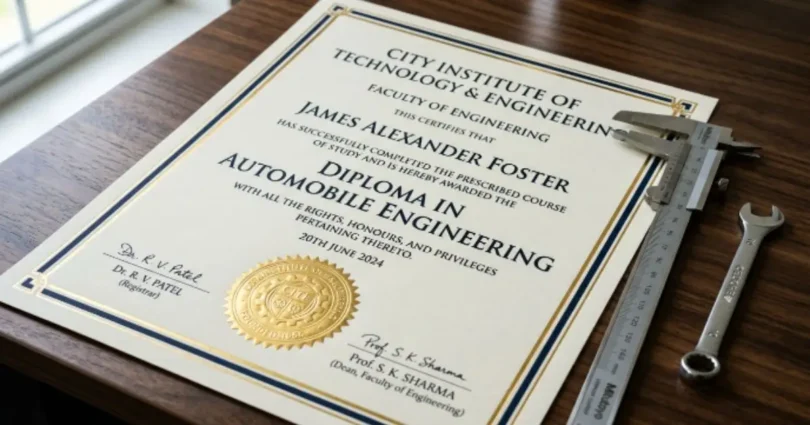
Diploma in Automobile Engineering is a technical course that teaches how vehicles work, repair methods, and core systems like engines, brakes, and transmission. This guide explains eligibility, admission process, syllabus, job options, salary, and career scope in simple words. It helps students understand whether this diploma is the right choice after school for a strong career in the automobile industry.
Have you ever wondered what actually happens inside an automobile workshop or how vehicles are repaired from the inside? Most students hear about a Diploma in Automobile Engineering, but very few understand what they will really learn.
A Diploma in Automobile Engineering is a skill-based course where you study engines, vehicle systems, and repair techniques in a practical way. Here is the thing, it is not just theory. You spend real time in workshops learning how machines actually work.
If you are thinking about this course, this guide will help you understand everything step by step. You will learn about eligibility, syllabus, practical training, job opportunities, salary, and future scope in a very simple way. No complex terms, just clear explanations that make sense.
By the end, you will feel confident about whether this course is right for you or not.
What is Diploma in Automobile Engineering?
Diploma in Automobile Engineering is a skill-based technical course that teaches you how vehicles work, how engines function, and how to repair and maintain automobile systems in real workshops.
This course focuses on real vehicle systems like engines, brakes, and transmission. You don’t just study theory. You also work on machines and tools in labs.
Think about it this way, every car or bike you see has multiple systems working together. This course helps you understand those systems in a simple, hands-on way.
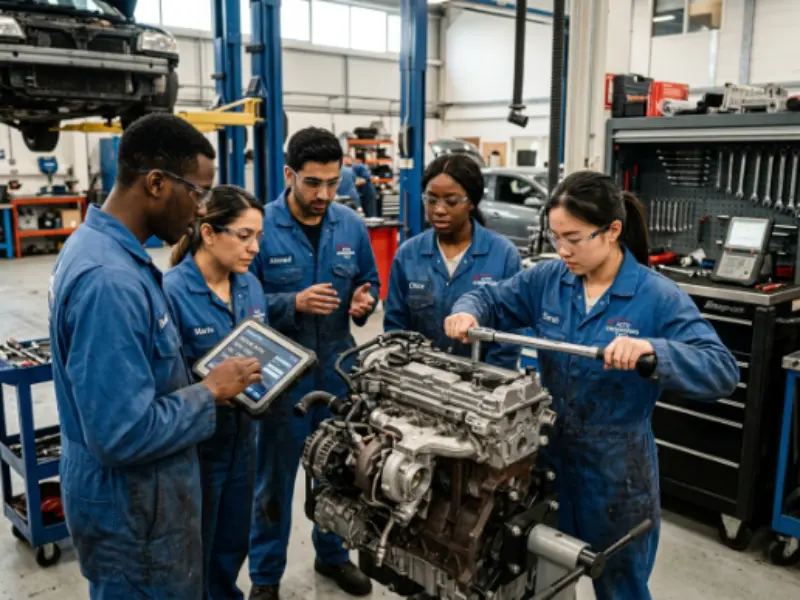
In practice, students often spend time inside workshops learning how to open engines, check faults, and fix mechanical issues. That is what makes this diploma very practical and job-focused.
Meaning of automobile engineering diploma
This diploma is a short-term technical program that builds basic skills in automobile design, repair, and maintenance. It mainly prepares you for entry-level jobs in the automotive industry.
Who should choose this course
This course is good for you if:
- You like machines and vehicles
- You want a technical job after school
- You prefer practical learning over theory
Difference between diploma and degree
A diploma focuses more on skills and practical training. A degree focuses more on theory and advanced engineering concepts.
For example, diploma students often work in workshops, while degree students may go into design or higher engineering roles.
This course builds the base for your career in the automotive field and prepares you for real industry work.
Why should you choose Diploma in Automobile Engineering?
You should choose this diploma if you want fast job skills, hands-on training, and early entry into the automobile industry without waiting for a long degree.
The truth is, many students want a career where they can start working early and earn experience quickly. This course fits that need very well.
Let me explain, the automobile industry keeps growing because vehicles are always needed. Cars, bikes, trucks, and EVs all need trained people for repair and maintenance.
Job opportunities after course
After this diploma, you can work in:
- Automobile service centers
- Car manufacturing companies
- Private workshops
Industry demand for skilled technicians
In real use, companies need technicians who can fix engines, diagnose problems, and handle tools. Skilled workers are always in demand, especially in growing cities.
Future growth in automotive field
The automotive sector is also moving toward electric vehicles. This means new job roles are opening for trained technicians who understand both traditional and modern systems.
Here is the thing, this course gives you practical skills that you can use immediately in real jobs, which makes it a strong career starting point.
You may also like it:
Techabbey | Innovating the Future of Technology
Educationbeing com | How to Revolutionize Your Learning
Techloomz com | Your Ultimate Guide to Tech Solutions
What are the eligibility criteria for this course?
To join Diploma in Automobile Engineering, you usually need to complete 10th standard, especially with science and math subjects.
Most institutes keep the entry simple so students can start early in technical education.
Think about it this way, this course is designed for students who want to enter technical fields without waiting for higher education.
Minimum education requirement
You need:
- 10th pass from a recognized board
- Basic knowledge of science or mathematics
Age and percentage rules
Some colleges may set:
- Minimum age requirement around 15 to 17 years
- Minimum marks criteria, usually 40% to 50%
Lateral entry options
If you have completed 12th with science or ITI, some institutes allow direct entry into the second year.
For example, ITI students in mechanical trade often join this diploma to upgrade their skills and get better job opportunities.
This course is open to many students, which makes it one of the most accessible technical education paths in the automobile field.
How is the admission process done?
Admission in Diploma in Automobile Engineering is done either through merit based selection or entrance exams, depending on the college or institute.
Most colleges keep the process simple so students can easily apply after school.
Here is the thing, different institutes follow different rules, but the goal is the same, selecting students who are interested in technical learning.
Direct admission process
Many private colleges offer direct admission based on your 10th marks. You just submit documents and confirm your seat.
Entrance exam based admission
Some government and polytechnic institutes conduct entrance exams. These exams test basic math and science knowledge.
For example, state polytechnic exams are common in many regions and are used for seat allocation.
Required documents
You usually need:
- 10th mark sheet
- Identity proof
- Passport size photos
- School leaving certificate
The admission process is not difficult, but you should apply early because seats fill quickly in good institutes.
It is better to check college requirements carefully before applying so you don’t miss any step.
What subjects are taught in Diploma in Automobile Engineering?
This diploma teaches core automobile systems like engines, transmission, braking, suspension, and practical workshop training.
The syllabus is designed to give you both theory and hands-on skills so you can work directly in the industry.
Think about it this way, every subject connects to a real part of a vehicle you see on the road.
Engine systems and internal combustion engine
You learn how engines work, how fuel burns, and how power is generated in vehicles.
Transmission, braking, and suspension systems
These subjects explain how power moves from engine to wheels and how vehicles stay safe and stable.
Workshop and practical training subjects
You spend time in labs learning real repair work, tool handling, and fault checking.
In real practice, students often open engines, study parts, and understand how small faults can affect full vehicle performance.
This is the section where most learning becomes practical instead of theory.
What practical skills will you learn in this course?
You will learn real vehicle repair skills, diagnostic methods, and hands-on maintenance techniques used in workshops and service centers.
This is the most important part of the diploma because it prepares you for actual jobs.
Let me explain, companies don’t just want theory knowledge. They want people who can fix problems in real vehicles.
Engine repair and maintenance skills
You learn how to repair engines, replace parts, and identify mechanical issues.
Use of diagnostic tools
Students learn how to use tools that check engine faults and system errors in modern vehicles.
Workshop safety and handling tools
You also learn how to safely use machines and tools without damaging parts or getting injured.
In practice, students often work on real vehicles during training, which builds confidence and real job experience.
These skills help you become job-ready right after completing the diploma.
What tools and workshop training are included?
This diploma includes hands-on training with real automobile tools, workshop equipment, and diagnostic machines used in vehicle repair and maintenance.
Here is the thing, you don’t just read about tools, you actually use them in real workshop environments. That is what makes this course practical and job-ready.
In practice, students spend a lot of time in labs learning how to handle machines safely and fix real vehicle problems step by step.
Mechanical tools used in labs
You work with tools like:
- Spanners and wrenches for engine parts
- Screwdrivers and torque tools for fittings
- Lifting equipment for heavy components
These tools help you understand how real repair work happens in service centers.
Engine dismantling practice
Students learn how to open and assemble engines. This helps you understand how each part works inside a vehicle.
For example, you may remove a cylinder head and study how combustion happens inside an internal combustion engine.
CAD design basics for vehicles
You also get introduced to basic CAD design. This helps you understand how modern vehicles are designed on computers before manufacturing.
In real training sessions, students often work in groups to repair engines, which builds teamwork and confidence for industry jobs.
This hands-on exposure prepares you for real service center work after completing the diploma.
Which are the top colleges for Diploma in Automobile Engineering?
Top colleges for Diploma in Automobile Engineering include government polytechnics and private technical institutes that offer strong workshop training and industry exposure.
The truth is, your college choice can affect your practical learning quality and job opportunities after the course.
Let me explain, good colleges focus more on workshop training than just classroom teaching.
Government colleges
Government polytechnic colleges are often preferred because:
- Lower fees
- Standard syllabus
- Strong industry reputation
Private institutes
Private colleges may offer:
- Better infrastructure
- More lab equipment
- Faster admission process
How to choose the right college
You should check:
- Workshop facilities
- Placement support
- Faculty experience
- Industry tie-ups
For example, colleges with active automobile labs give you better hands-on exposure than theory-heavy institutes.

In practice, students from good training institutes often perform better in workshops because they already know how real tools and systems work.
Choosing the right college makes a big difference in your learning journey.
What career options are available after diploma?
After this diploma, you can work in automobile service centers, manufacturing companies, workshops, or continue higher studies in engineering.
Here is the thing, this course gives you multiple paths, not just one fixed job direction.
In real industry use, diploma holders are needed everywhere vehicles are repaired, built, or maintained.
Private sector jobs
You can work in:
- Car service centers
- Automobile manufacturing plants
- Private workshops and garages
Government job options
Some opportunities include:
- Transport departments
- Public sector workshops
- Railways technical roles (in some cases)
Higher studies options
You can also go for:
- BTech in Automobile Engineering
- Mechanical Engineering degree
- Skill certification programs
In practice, many students start in workshops and later move into better positions after gaining experience.
This course gives you a strong base to grow in the automotive field step by step.
You may also like it:
Tech ehla com | Your Guide to the Latest Tech Trends
Dailydishnews | Latest Updates & Top Stories
Newsreverse com | How to Get the Latest News and Updates
What job roles can you get after this diploma?
After this diploma, you can work as an automobile technician, service engineer, or workshop assistant in the automotive industry.
Here is the thing, companies don’t just look for degrees. They look for people who can fix real vehicle problems and handle tools with confidence.
In practice, diploma holders often start in entry-level technical roles and grow step by step with experience.
Automobile technician roles
You handle:
- Engine repair work
- Vehicle inspection
- Basic troubleshooting
This is one of the most common starting jobs after the diploma.
Service engineer jobs
In this role, you work in service centers and help diagnose vehicle issues using tools and systems.
For example, you may check engine faults using diagnostic machines in a car workshop.
Workshop supervisor roles
With experience, you can guide junior technicians and manage repair work inside workshops.
The truth is, these roles help you build real industry experience that can lead to better jobs later.
What is the salary after Diploma in Automobile Engineering?
Salary after this diploma depends on your skills, experience, and the type of company you join, starting from entry-level pay and increasing with growth.
Let me explain, salary is not fixed in this field. It changes based on your practical ability and job location.
In real industry use, skilled technicians often earn more than average beginners within a short time.
Entry level salary range
Fresh diploma holders usually start with:
- Basic workshop jobs
- Service center roles
- Small repair shops
Salary is modest at this stage, but experience grows fast.
Experienced technician salary
With 2 to 5 years of experience:
- You handle complex repairs
- You work with advanced tools
- You earn significantly higher pay
Government vs private salary comparison
Government roles offer stability, while private jobs often offer faster growth based on performance.
Here is the thing, your skill level matters more than your certificate in this field.
What is the career roadmap after this diploma?
The career roadmap after this diploma includes starting with technical jobs, gaining experience, and then moving into higher roles or further studies.
Think about it this way, your journey in automobile engineering is step by step, not instant.
In practice, most students start small and grow into skilled professionals over time.
Step 1 after 10th education
You complete your basic education and choose this diploma as your technical path.
Step 2 diploma training period
During the course:
- You learn workshop skills
- You understand vehicle systems
- You gain practical experience
Step 3 job or further studies
After completing the diploma:
- You can start working in workshops
- Or continue BTech in engineering
- Or join certification programs
The truth is, this roadmap gives you flexibility. You can choose your direction based on your interest and skills.
Frequently Asked Questions
Here are some FAQs down there you people ask and I replied them properly check them out.
What is Diploma in Automobile Engineering?
A Diploma in Automobile Engineering is a technical course that teaches you how vehicles work and how to repair and maintain them. You learn about engines, brakes, transmission, and other systems. It is a skill-focused program that prepares you for jobs in workshops, service centers, and automobile companies.
What is the eligibility for automobile engineering diploma?
The eligibility for this diploma is usually 10th pass from a recognized board. Some institutes may ask for science or math subjects with minimum marks. A few colleges also allow 12th pass or ITI students through lateral entry into the second year of the automobile engineering course.
What jobs can I get after this diploma?
After this diploma, you can work as an automobile technician, service advisor, workshop assistant, or engine mechanic. Many students also join car service centers, manufacturing plants, or repair workshops. With experience, you can move into higher roles like supervisor or diagnostic specialist in the automotive industry.
What is the salary after automobile engineering diploma?
The salary after this diploma usually starts at a basic level for freshers in workshops or service centers. With experience and skill improvement, earnings increase steadily. Skilled technicians working in good companies or urban areas often earn much better income compared to entry-level positions in small workshops.
How many years is Diploma in Automobile Engineering?
This diploma usually takes 3 years to complete after 10th standard. Some institutes may also offer lateral entry for 12th pass or ITI students, which can reduce the duration. The course includes classroom learning, lab work, and practical workshop training for real industry exposure.
Is automobile engineering a good career option?
Yes, automobile engineering is a good career option if you like machines and practical work. The automotive industry keeps growing, so skilled technicians are always needed. You can start working early, gain experience, and later move into better job roles or higher studies in engineering.
Can I get a government job after this diploma?
Yes, you can apply for certain government jobs after completing this diploma. Opportunities exist in transport departments, railways technical roles, and public sector workshops. Selection depends on exams and eligibility rules, but having technical skills from this diploma improves your chances.
What subjects are included in this course?
The course includes subjects like engine systems, braking systems, transmission, vehicle maintenance, and workshop practice. You also study basic CAD design and automotive electronics. These subjects combine theory with hands-on training so you can understand real vehicle systems clearly and work in industry environments.
What is the future scope of automobile engineering?
The future scope of automobile engineering is strong because vehicles are always in demand. With the rise of electric vehicles and advanced automotive technology, new job opportunities are growing. Skilled technicians and engineers will continue to be needed in manufacturing, repair, and service industries.
Conclusion
It feels good when things finally become clear, right? Now you have a complete picture of how a Diploma in Automobile Engineering actually works and what it can do for your future.
You saw how this course teaches real vehicle systems like engines, brakes, and transmission in a practical way. You also learned about eligibility, admission steps, career options, salary, and the skills you build inside real workshops. The truth is, this diploma is not just about studying, it is about building hands-on confidence for real jobs.
If you choose this path with the right mindset, you can grow step by step in the automobile industry and turn your interest in vehicles into a real career. You are honestly closer than you think to starting something practical and valuable for your future.
Take your time, think clearly, and make a decision that feels right for you.
You may also like it:
Autolinkrush com | Your Ultimate Guide to Car Solutions
Greenfield Stadium Pitch Report – Batting or Bowling?