
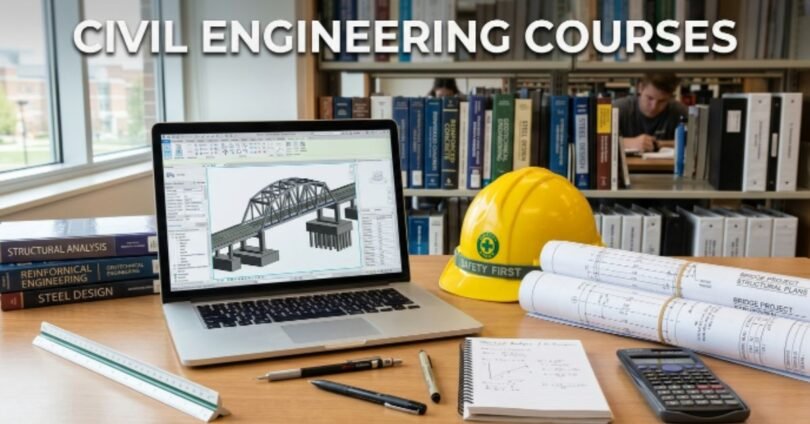
Civil engineering is one of the most important fields in building our world. If you want to design roads, bridges, buildings, or water systems, civil engineering courses are the first step. These courses teach you the skills needed to plan, design, and manage construction projects.
By taking civil engineering courses, you can start a strong career in engineering. Whether you want to work on big projects or become an expert in a specific area, these courses give you the knowledge and hands-on experience you need.
Types of Civil Engineering Courses
Civil engineering courses come in different levels and formats to suit everyone’s needs. Here’s a clear breakdown:
Diploma Courses
- Short-term courses, usually 2–3 years.
- Focus on practical skills for construction and site work.
- Ideal for students after 10th or 12th grade.
- Prepares you for entry-level engineering jobs quickly.
Undergraduate Courses (B.Tech/B.E)
- Typically 4-year programs after 12th grade.
- Covers core civil engineering subjects like structural, geotechnical, and transportation engineering.
- Includes labs, workshops, and small projects.
- Opens opportunities for higher-level engineering roles and government jobs.
Postgraduate Courses (M.Tech/M.E)
- Advanced 2-year courses after a bachelor’s degree.
- Specializations like structural, environmental, or transportation engineering.
- Focus on research, design, and complex problem-solving.
- Ideal for career growth or academic careers.
Online Courses and Certifications
- Flexible courses you can take from anywhere.
- Short programs for specific skills like AutoCAD, project management, or survey techniques.
- Affordable and good for working professionals.
- Helps you upgrade skills without leaving your job.
You may also like it:
Techabbey | Innovating the Future of Technology
Educationbeing com | How to Revolutionize Your Learning
Techloomz com | Your Ultimate Guide to Tech Solutions
Civil Engineering Courses Syllabus Overview
The syllabus of civil engineering courses is designed to give both theoretical knowledge and practical experience. Here’s what you can expect:
Core Subjects
- Structural Engineering: Learn how to design strong buildings and bridges.
- Geotechnical Engineering: Study soil, foundations, and underground structures.
- Transportation Engineering: Understand road, rail, and traffic system design.
- Water Resources & Environmental Engineering: Focus on water supply, drainage, and sustainability.
Practical Labs and Workshops
- Hands-on experiments to understand materials and construction techniques.
- Use modern tools and software like AutoCAD and STAAD Pro.
- Learn surveying techniques and measurements.
- Helps you connect theory with real-world applications.
Project Work and Internships
- Work on mini-projects to apply classroom knowledge.
- Participate in site visits and construction projects.
- Internships in engineering firms give real job experience.
- Builds skills that make you ready for a professional career.
Eligibility for Civil Engineering Courses
To join civil engineering courses, you need to meet certain requirements. Here’s a simple guide:
Educational Requirements
- For diploma courses: completion of 10th grade with science subjects.
- For undergraduate courses (B.Tech/B.E): completion of 12th grade with Physics, Chemistry, and Math.
- For postgraduate courses (M.Tech/M.E): a bachelor’s degree in civil engineering or a related field.
- Some institutes may accept equivalent qualifications from recognized boards.
Age or Grade Limits
- Most institutes have no strict age limit for diploma or degree courses.
- Some government or scholarship programs may have age restrictions.
- Minimum grades in science and math may be required for admission.
- Check the institute’s specific guidelines before applying.
Entrance Exams (if applicable)
- Some colleges require exams like JEE Main, GATE, or state-level engineering tests.
- Entrance exams test your understanding of physics, chemistry, and math.
- Good scores improve your chances of admission and scholarships.
- Online and private colleges may have direct admission without exams.
Duration and Fees of Civil Engineering Courses
Knowing the duration and fees helps you plan your civil engineering courses better.
Course Duration
- Diploma Courses: Usually 2–3 years after 10th grade.
- Undergraduate Courses (B.Tech/B.E): Typically 4 years after 12th grade.
- Postgraduate Courses (M.Tech/M.E): Around 2 years after a bachelor’s degree.
- Some online certifications can take a few weeks to a few months.
Approximate Fees
- Diploma Courses: $500–$2,000 depending on the institute.
- Undergraduate Courses: $2,000–$10,000 per year in private colleges; less in government colleges.
- Postgraduate Courses: $3,000–$12,000 per year depending on specialization and institute.
- Online courses are often $50–$500 for certifications.
Cost vs Benefit of Each Course
- Diploma courses are cheaper and faster but offer limited career growth.
- Undergraduate courses provide strong knowledge and better job opportunities.
- Postgraduate courses are expensive but open higher positions and specialized roles.
- Online certifications are low-cost ways to upgrade skills without leaving a job.
Career Opportunities After Civil Engineering Courses
Civil engineering courses can lead to many rewarding career paths. As cities grow and new infrastructure projects begin, skilled civil engineers remain in high demand.
Job Roles After Civil Engineering Courses
Different career options are available based on your skills and interests.
- Site Engineer: Supervises construction work and ensures projects follow plans.
- Structural Engineer: Designs safe and strong buildings, bridges, and other structures.
- Project Manager: Manages project timelines, budgets, and team coordination.
- Construction Engineer: Oversees construction activities and solves on-site problems.
Companies Hiring Civil Engineers
Many organizations hire graduates who complete civil engineering courses.
- Construction companies need engineers for residential and commercial projects.
- Government departments hire engineers for roads, bridges, and public infrastructure.
- Real estate developers employ civil engineers for building projects.
- Consulting firms recruit engineers for design, planning, and project management services.
Salary Expectations After Civil Engineering Courses
Salaries can vary based on experience, location, and job role.
- Fresh graduates can earn competitive starting salaries in entry-level positions.
- Experienced engineers often receive higher pay and additional benefits.
- Specialized roles, such as structural engineers and project managers, usually offer better salaries.
- Engineers working on large infrastructure projects may have strong earning potential.
Why Career Growth Is Strong in Civil Engineering
The demand for skilled professionals continues to increase.
- New roads, buildings, and transportation systems require qualified engineers.
- Urban development projects create long-term job opportunities.
- Experience and additional certifications can help you move into senior roles.
- Civil engineering offers stable career growth in both public and private sectors.
You may also like it:
Tech ehla com | Your Guide to the Latest Tech Trends
Dailydishnews | Latest Updates & Top Stories
Newsreverse com | How to Get the Latest News and Updates
Skills Gained from Civil Engineering Courses
Civil engineering courses help students develop both technical and practical skills. These skills are useful for managing construction projects, solving problems, and building safe structures.
Technical Skills Gained from Civil Engineering Courses
These skills help engineers plan, design, and complete construction projects effectively.
- CAD (Computer-Aided Design): Learn to create detailed drawings and construction plans using software tools.
- Engineering Design: Understand how to design buildings, roads, bridges, and other structures.
- Surveying Skills: Learn how to measure land and collect site data before construction begins.
- Construction Planning: Gain knowledge of project scheduling, materials, and construction methods.
Soft Skills Gained from Civil Engineering Courses
Soft skills are important for working with teams and managing projects successfully.
- Teamwork: Learn how to work with engineers, architects, and construction workers.
- Project Management: Develop skills to plan, organize, and complete projects on time.
- Communication Skills: Learn to explain ideas clearly through reports, drawings, and meetings.
- Problem-Solving Skills: Find practical solutions to challenges that arise during construction projects.
Real-Life Examples of Skills Application
The skills learned in civil engineering courses are used every day in the workplace.
- A site engineer uses surveying skills to mark the correct location for a new building.
- A structural engineer uses design software to create safe bridge and building plans.
- A project manager uses planning skills to keep a construction project on schedule.
- A construction team uses communication and teamwork skills to complete projects safely and efficiently.
Why These Skills Matter
These skills help civil engineers perform their jobs with confidence and accuracy.
- They improve job performance and career opportunities.
- They help engineers manage projects more effectively.
- They make it easier to work with different teams and clients.
- They prepare students for real-world engineering challenges.
Tips to Choose the Right Civil Engineering Course
Choosing the right civil engineering course can help you build a strong foundation for your future career. Here are some important factors to consider before making your decision.
Accreditation and Reputation of Institutes
A recognized institute can improve the value of your qualification.
- Choose a course from an accredited and approved institution.
- Check the institute’s reputation in the engineering field.
- Look at student reviews and success stories.
- Research the institute’s faculty, facilities, and learning resources.
Online vs Offline Options
Both learning formats have benefits depending on your needs.
- Online courses offer flexibility and allow you to study from anywhere.
- Offline courses provide classroom learning and direct interaction with teachers.
- Online programs are often more affordable than traditional courses.
- Consider your schedule, learning style, and career goals before choosing.
Internship and Placement Support
Practical experience is an important part of engineering education.
- Choose institutes that offer internship opportunities with industry partners.
- Check the placement record of the institute.
- Look for courses that include site visits and practical training.
- Strong placement support can help you find a job more quickly after graduation.
Course Curriculum and Specializations
The syllabus should match your interests and career plans.
- Review the subjects covered in the course.
- Check if the course offers modern engineering software training.
- Look for specialization options such as structural or transportation engineering.
- Ensure the curriculum includes both theory and practical learning.
Fees and Return on Investment
Consider the overall value of the course before enrolling.
- Compare fees across different institutes.
- Check for scholarships and financial aid options.
- Evaluate the career opportunities available after completing the course.
- Choose a course that offers a good balance between cost and career growth.
Why Choosing the Right Course Matters
A well-chosen course can make a big difference in your career journey.
- It helps you develop the right skills for the industry.
- It improves your chances of getting quality job opportunities.
- It provides valuable practical experience and industry exposure.
- It supports long-term career growth and professional success.
Conclusion
Civil engineering courses are a great choice for students who want to build a career in construction, infrastructure, and design. These courses provide the knowledge, practical skills, and industry experience needed to succeed in the engineering field.
Whether you choose a diploma, degree, or certification course, the right program can open the door to many exciting career opportunities. Take time to compare your options and choose a course that matches your interests, goals, and future plans.
You may also like it:
Autolinkrush com | Your Ultimate Guide to Car Solutions
Greenfield Stadium Pitch Report – Batting or Bowling?