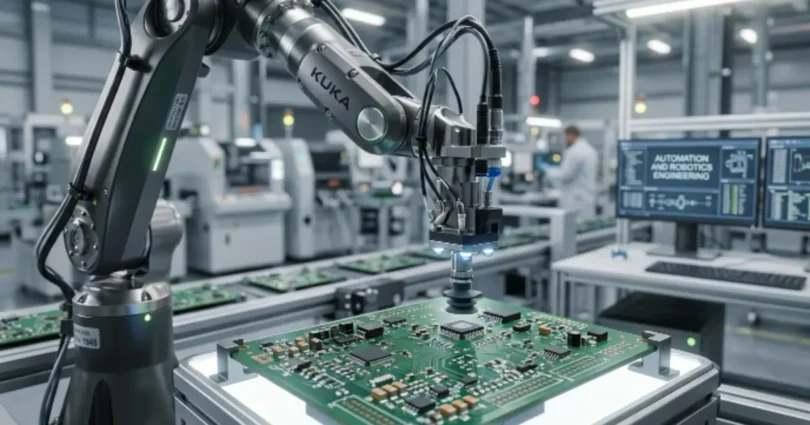
Technology is changing the world very fast. Machines are now doing many tasks that people used to do by hand. This smart system of machines is known as automation and robotics engineering.
Automation and robotics engineering helps industries work faster, safer, and more accurately. It combines machines, control systems, and smart software to complete tasks with less human effort. From factories to hospitals, this field is making a big impact everywhere.
In simple words, automation and robotics engineering is all about building smart machines that can think, move, and work on their own to make life easier.
What is Automation and Robotics Engineering?
Automation and robotics engineering is a field that builds smart systems and machines to do work with less human effort. It combines machines, control systems, and software to perform tasks quickly and safely.
Simple Definition of Automation
- Automation means using machines or systems to do work automatically.
- It reduces the need for human effort in repeated tasks.
- It helps save time and improves accuracy.
- Example: A washing machine that works on its own cycle.
Simple Definition of Robotics
- Robotics is the study of building and using robots.
- Robots are machines that can move and perform tasks.
- They often follow instructions from software or sensors.
- Example: A robot arm used in factories.
How Automation and Robotics Work Together
- Automation gives instructions to machines to work on their own.
- Robotics provides the physical machine to do the task.
- Together, they create smart systems that work without human control.
- Example: A robot that automatically packs products in a factory.
Real-Life Example: Factory Robots Assembling Cars
- Robots are used to weld car parts together.
- Machines paint cars with high accuracy.
- Conveyor belts move parts automatically between stations.
- The whole process becomes faster, safer, and more efficient.
You may also like it:
Techabbey | Innovating the Future of Technology
Educationbeing com | How to Revolutionize Your Learning
Techloomz com | Your Ultimate Guide to Tech Solutions
How Automation and Robotics Engineering Works
Automation and robotics engineering works by connecting machines, sensors, and software. Together, they help complete tasks with speed, accuracy, and less human effort.
Sensors and Data Collection
- Sensors act like the “eyes and ears” of machines.
- They collect data from the environment like heat, light, or movement.
- This data helps machines understand what is happening around them.
- Example: A sensor detects when a product is placed on a conveyor belt.
Machines and Robotic Arms
- Machines perform physical work like lifting, moving, or assembling.
- Robotic arms are used for precise and heavy tasks.
- They can work continuously without getting tired.
- Example: A robotic arm picks and places car parts in factories.
Software and Control Systems
- Software gives instructions to robots and machines.
- Control systems manage how and when tasks are performed.
- They ensure everything works in the correct order.
- Example: A program controls a robot to pack items in boxes.
Simple Flow of How Tasks Are Automated
- First, sensors collect information from the environment.
- Then, software processes the data and makes decisions.
- After that, machines or robots perform the required action.
- Finally, the system checks results and repeats the process if needed.
Applications of Automation and Robotics Engineering
Automation and robotics engineering is used in many real-world fields. It helps make work faster, safer, and more accurate in different industries.
Manufacturing Industries
- Robots are used to build products in factories.
- Machines handle welding, painting, and packaging tasks.
- Production becomes faster and more consistent.
- Example: Car factories use robots to assemble vehicles.
Healthcare and Surgery Robots
- Robots help doctors in complex surgeries.
- They improve accuracy during operations.
- Machines assist in patient care and diagnosis.
- Example: Robotic arms used in minimally invasive surgery.
Agriculture Automation
- Machines help farmers plant and harvest crops.
- Automated systems water fields at the right time.
- Drones are used to monitor crop health.
- Example: Smart irrigation systems reduce water waste.
Space Exploration and Defense Systems
- Robots explore planets where humans cannot go.
- Machines collect data from space missions.
- Defense systems use automation for safety and monitoring.
- Example: Mars rovers explore the surface of Mars.
Automation and Robotics Engineering in Daily Life
Automation and robotics engineering is not only used in industries. It is also part of our daily life. We use it in homes, shops, phones, and public systems.
Smart Home Devices (Like Robot Vacuums)
- Robot vacuums clean floors automatically without human effort.
- Smart ACs adjust temperature based on room conditions.
- Lights can turn on or off using voice or sensors.
- Example: A robot vacuum cleans your room while you relax.
Self-Checkout Systems in Stores
- Customers scan and pay for items without a cashier.
- Machines read barcodes quickly and correctly.
- It saves time during shopping.
- Example: Supermarkets use self-checkout counters to reduce waiting lines.
AI-Based Assistants in Phones
- Virtual assistants help with calls, messages, and reminders.
- They respond to voice commands.
- They learn user habits to give better suggestions.
- Example: Asking your phone for weather updates or directions.
Traffic and Security Systems
- Traffic lights adjust automatically based on vehicle flow.
- Cameras detect movement for safety monitoring.
- Security systems alert authorities in case of danger.
- Example: Smart traffic systems reduce road jams in cities.
You may also like it:
Tech ehla com | Your Guide to the Latest Tech Trends
Dailydishnews | Latest Updates & Top Stories
Newsreverse com | How to Get the Latest News and Updates
Skills Needed for Automation and Robotics Engineering
To work in automation and robotics engineering, you need a mix of technical and thinking skills. These skills help you design, build, and improve smart machines.
Basic Programming Skills
- Programming helps you give instructions to robots.
- It is used to control machine actions step by step.
- Simple coding languages are used in robotics systems.
- Example: Writing code to move a robotic arm left or right.
Problem-Solving Ability
- Helps you fix issues in machines and systems.
- Allows you to find better and faster solutions.
- Important when robots do not work as expected.
- Example: Solving errors in an automated production line.
Knowledge of Electronics
- Electronics helps you understand circuits and sensors.
- It is used to connect hardware parts of robots.
- Helps in building working robotic systems.
- Example: Connecting sensors that detect movement or heat.
Logical Thinking and Creativity
- Logical thinking helps you plan step-by-step solutions.
- Creativity helps you design new robotic ideas.
- Both are important for improving machines.
- Example: Designing a robot that can clean narrow spaces.
Future Scope of Automation and Robotics Engineering
Automation and robotics engineering is growing very fast. In the future, more industries and daily life systems will depend on smart machines and robots.
Job Opportunities in Robotics
- Many companies are hiring robotics engineers.
- Jobs are available in manufacturing, IT, and healthcare.
- Skilled workers are needed to design and maintain robots.
- Example: Robotics engineers work in car and tech industries.
Growth in AI and Automation Industries
- Artificial intelligence is making robots smarter.
- Automation is improving speed and accuracy in work.
- New industries are being created every year.
- Example: AI-powered robots in customer service and factories.
Demand in Global Markets
- Countries are investing heavily in robotics technology.
- Companies want faster and cheaper production systems.
- Skilled engineers are needed worldwide.
- Example: Robotics experts are in demand in Europe and Asia.
Future Smart Factories and Cities
- Factories will fully run with automated systems.
- Cities will use smart traffic and security systems.
- Robots will handle many daily tasks.
- Example: Smart cities using automated transport and energy systems.
Challenges in Automation and Robotics Engineering
Automation and robotics engineering is powerful, but it also comes with some real challenges. These challenges can affect cost, skills, and system performance.
High Cost of Systems
- Robotics systems need expensive machines and tools.
- Setup cost is high for small companies.
- Advanced sensors and software also cost more.
- Example: A factory robot setup needs a large investment.
Need for Skilled Workers
- Skilled engineers are needed to run and manage systems.
- Training takes time and effort.
- Not everyone can handle complex machines easily.
- Example: Companies hire trained robotics experts for maintenance.
Technical Complexity
- Systems include software, hardware, and sensors together.
- Understanding all parts can be difficult.
- Small errors can affect the whole system.
- Example: A coding mistake can stop a robot from working.
Maintenance Issues
- Robots need regular checking and repair.
- Parts can wear out over time.
- Fixing advanced machines can be difficult.
- Example: Factory robots need routine servicing to avoid breakdowns.
Conclusion
Automation and robotics engineering is changing the way we live and work. It makes tasks faster, easier, and more accurate. From factories to homes, it is improving every part of life.
This field also brings some challenges like cost and technical skills. But with time and learning, these challenges can be managed. The future of this field is very bright, with many job opportunities and smart innovations ahead.
If you are interested in technology and machines, this can be a great career choice for you.
You may also like it:
Autolinkrush com | Your Ultimate Guide to Car Solutions
Greenfield Stadium Pitch Report – Batting or Bowling?