
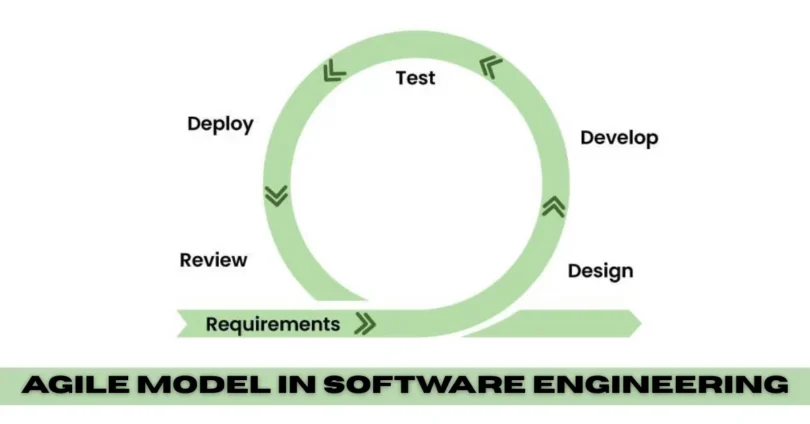
The agile model in software engineering is a popular way to build software quickly and efficiently. Unlike traditional methods, it focuses on teamwork, flexibility, and making improvements step by step.
In today’s fast-changing tech world, the agile model in software engineering helps developers deliver better software that meets customer needs. It allows teams to adapt to changes easily and complete projects faster.
Key Principles of Agile Model in Software Engineering
The agile model is based on a set of principles that help teams build better software. These principles focus on teamwork, flexibility, and customer satisfaction. They help developers deliver quality products while adapting to changes quickly.
Collaboration in Agile Model in Software Engineering
Collaboration helps team members work together and solve problems faster.
- Team members communicate regularly throughout the project.
- Developers, testers, and managers work as one team.
- Customers can share feedback during development.
- Better teamwork reduces mistakes and improves results.
Example: If a customer wants a new feature in a mobile app, the team can discuss it together and make changes quickly.
You may also like it:
Techabbey | Innovating the Future of Technology
Educationbeing com | How to Revolutionize Your Learning
Techloomz com | Your Ultimate Guide to Tech Solutions
Flexibility in Agile Model in Software Engineering
Flexibility allows teams to handle changes without disrupting the entire project.
- Requirements can be updated during development.
- Teams can respond to customer feedback quickly.
- New ideas can be added without starting from the beginning.
- Changes are managed in small development cycles.
Example: An online shopping website may need a new payment option. Agile teams can add it during the next sprint.
Customer Focus in Agile Model in Software Engineering
Customer satisfaction is one of the most important goals of agile development.
- Customers are involved throughout the project.
- Teams collect feedback regularly.
- Software is improved based on user needs.
- The final product matches customer expectations.
Example: A company developing a food delivery app can ask users for feedback and improve features based on their suggestions.
Continuous Improvement in Agile Model in Software Engineering
Teams regularly review their work and look for ways to improve.
- Problems are identified and fixed early.
- Team performance improves over time.
- Development processes become more efficient.
- Quality standards remain high.
Example: After each sprint, the team discusses what worked well and what needs improvement for the next sprint.
Incremental Development in Agile Model in Software Engineering
Software is developed in small parts instead of building everything at once.
- Features are delivered step by step.
- Customers can use parts of the software earlier.
- Errors are easier to identify and fix.
- Development becomes more manageable.
Example: A banking app may first release account management features and later add loan and investment services.
Fast Delivery in Agile Model in Software Engineering
Agile focuses on delivering working software in short time periods.
- Customers receive updates quickly.
- Teams can test features earlier.
- Feedback is collected faster.
- Project progress remains visible.
Example: Instead of waiting several months, a software company can release a basic version of an app within a few weeks.
Why These Principles Matter in Agile Model in Software Engineering
These principles help teams create software that meets user needs and adapts to change.
- Improve communication among team members.
- Increase customer satisfaction.
- Reduce development risks.
- Deliver high-quality software faster.
Advantages of Agile Model in Software Engineering
The agile model offers many benefits that help teams build software efficiently and keep customers happy.
Faster Development and Delivery
Agile helps teams deliver working software quickly.
- Tasks are divided into small parts called sprints.
- Teams can release features step by step instead of waiting for the whole project.
- Problems are spotted and fixed early, saving time later.
- Customers start using the software sooner.
Example: A messaging app can launch basic chat features first and add video calls later.
Better Adaptability to Changes
Agile makes it easy to handle changes during development.
- Teams can adjust features based on feedback or market needs.
- Changes don’t disrupt the entire project.
- New requirements are incorporated in the next sprint.
- Teams stay flexible and responsive.
Example: An e-commerce site can add new payment methods based on customer demand without delaying the project.
Higher Customer Satisfaction
Agile focuses on delivering what the customer really wants.
- Customers give feedback regularly.
- Teams make improvements continuously.
- The final product meets user expectations.
- Problems are fixed before the final release.
Example: A fitness app can improve its workout tracker feature after user feedback to make it more useful.
Better Team Collaboration
Agile encourages strong teamwork and communication.
- Everyone works together closely.
- Decisions are made quickly within the team.
- Knowledge sharing improves efficiency.
- Teams solve problems faster.
Example: A software team building a travel app can quickly fix a bug because developers and testers communicate every day.
Disadvantages of Agile Model in Software Engineering
While the agile model has many benefits, it also comes with some challenges that teams need to manage carefully.
Requires Experienced Team Members
Agile works best when team members have the right skills and experience.
- Team members must understand agile practices and processes.
- Inexperienced developers may struggle with self-organization.
- Mistakes can happen if team roles are unclear.
- Continuous learning is required to keep up with agile methods.
Example: A new team may find it difficult to plan sprints or track progress without guidance.
Can Be Challenging for Large Projects
Managing big projects in agile can be complicated.
- Large teams need extra coordination and communication.
- It’s harder to keep everyone aligned on priorities.
- Changes in one area can affect multiple parts of the project.
- Documentation may be less detailed compared to traditional models.
Example: A nationwide banking software upgrade may need special planning to handle all teams and systems effectively.
Needs Constant Communication
Agile relies on frequent and clear communication.
- Teams must meet regularly to discuss progress.
- Poor communication can lead to misunderstandings.
- Remote or distributed teams may face extra challenges.
- Updates and feedback need to be shared quickly.
Example: A remote app development team may need video calls every day to stay coordinated.
Less Predictable Budget and Timeline
Agile projects can sometimes be harder to estimate.
- Frequent changes can affect costs and deadlines.
- Planning depends on iterative progress rather than fixed schedules.
- Stakeholders need flexibility in expectations.
Example: Adding new features mid-project may increase development costs.
You may also like it:
Tech ehla com | Your Guide to the Latest Tech Trends
Dailydishnews | Latest Updates & Top Stories
Newsreverse com | How to Get the Latest News and Updates
Agile Model in Software Engineering vs Other Models
The agile model is different from traditional software development models like Waterfall. Understanding the differences helps to see why agile is preferred for modern projects.
Agile Model vs Waterfall Model
Agile is flexible, while Waterfall follows a strict sequence of steps.
- Agile works in small cycles called sprints; Waterfall completes one phase at a time.
- Agile allows changes anytime; Waterfall requires changes to go through formal approval.
- Agile delivers working software faster; Waterfall waits until the end of the project.
- Agile encourages collaboration; Waterfall focuses more on documentation.
Example: In building an e-commerce app, Agile allows adding a new feature mid-project, but Waterfall would need a full redesign.
Agile Model vs Traditional Models
Agile is adaptive, while traditional models are more rigid.
- Agile values customer feedback throughout development; traditional models involve customers mainly at the start and end.
- Agile supports continuous improvement; traditional models follow a fixed plan.
- Agile teams communicate daily; traditional teams communicate less frequently.
- Agile focuses on delivering small usable parts; traditional models deliver everything at once.
Example: For a mobile banking app, Agile lets users try the app early and provide feedback, improving the product faster than a traditional approach.
Why Agile is Preferred for Modern Projects
Agile suits fast-changing and technology-driven environments.
- Modern projects need quick delivery and frequent updates.
- Customers expect software to evolve based on their needs.
- Teams can manage uncertainty and changes more effectively.
- Agile reduces risks by spotting problems early.
Example: Tech startups often use Agile to release new app features every few weeks instead of waiting months for a full release.
Key Practices in Agile Model in Software Engineering
The agile model follows several important practices that help teams develop software efficiently. These practices improve teamwork, increase productivity, and ensure that the final product meets customer needs.
Daily Stand-Ups in Agile Model in Software Engineering
Daily stand-up meetings help team members stay updated on project progress.
- These meetings are usually short and last around 15 minutes.
- Team members share what they completed, what they are working on, and any challenges they face.
- Problems are identified early before they become bigger issues.
- Everyone stays informed about project activities.
Example: A mobile app development team can discuss a bug during the daily stand-up and assign someone to fix it immediately.
Sprints in Agile Model in Software Engineering
Sprints are short development periods where teams complete specific tasks.
- A sprint usually lasts one to four weeks.
- Teams focus on completing a set of planned features.
- Progress is reviewed at the end of each sprint.
- Customers can see working software regularly.
Example: An online shopping website team may use a two-week sprint to develop and test a new checkout feature.
Iterative Development in Agile Model in Software Engineering
Iterative development means building software step by step instead of all at once.
- Features are developed in small parts.
- Teams test and improve each version before moving forward.
- Customer feedback is collected throughout development.
- Software quality improves with every iteration.
Example: A food delivery app may first release order placement features and later add live order tracking.
Sprint Reviews in Agile Model in Software Engineering
Sprint reviews allow teams to present completed work and gather feedback.
- Teams demonstrate the features completed during the sprint.
- Customers and stakeholders can share suggestions.
- Feedback helps improve future development cycles.
- Teams ensure the project stays aligned with customer needs.
Example: After completing a sprint, a banking app team may show a new payment feature to stakeholders for review.
Sprint Retrospectives in Agile Model in Software Engineering
Retrospectives help teams learn from their experiences and improve performance.
- Team members discuss what went well during the sprint.
- Challenges and obstacles are identified.
- Solutions are planned for future sprints.
- Continuous improvement becomes part of the development process.
Example: A software team may decide to improve communication after discovering delays caused by missed updates.
Continuous Testing in Agile Model in Software Engineering
Testing is performed regularly throughout the development process.
- Bugs are detected and fixed early.
- Software quality remains high.
- Teams avoid large testing workloads at the end of the project.
- Customers receive more reliable software.
Example: A video streaming platform can test new features every week to ensure smooth performance.
Real-Life Examples of Agile Model in Software Engineering
Many software companies use agile practices to deliver products faster and improve customer satisfaction.
- Social media platforms regularly release updates using agile methods.
- E-commerce companies add new features based on customer feedback.
- Mobile app developers improve apps through continuous updates.
- Software startups use agile to launch products quickly and stay competitive.
Example: A ride-sharing app may release a basic version first and then add features like fare estimates, live tracking, and digital payments through multiple agile sprints.
Why These Practices Are Important in Agile Model in Software Engineering
These practices help teams deliver better software while adapting to changing requirements.
- Improve communication and teamwork.
- Increase development speed.
- Reduce project risks.
- Enhance customer satisfaction.
Tools Supporting Agile Model in Software Engineering
Agile teams use different tools to manage tasks, track progress, and improve communication. These tools make it easier to organize work and ensure projects move forward smoothly.
Jira in Agile Model in Software Engineering
Jira is one of the most popular tools used by agile software development teams.
- Helps teams create and manage project tasks.
- Supports sprint planning and backlog management.
- Tracks project progress in real time.
- Makes it easy to identify and resolve issues.
Example: A software development team can use Jira to assign tasks to developers and monitor sprint progress from one dashboard.
Trello in Agile Model in Software Engineering
Trello uses visual boards and cards to help teams organize their work.
- Tasks can be moved between different stages of development.
- Team members can see project status at a glance.
- Easy to use, even for beginners.
- Supports collaboration and task tracking.
Example: A mobile app team can create cards for design, development, testing, and deployment and move them as work progresses.
Asana in Agile Model in Software Engineering
Asana helps teams plan, manage, and track project activities.
- Organizes tasks in one place.
- Allows teams to set deadlines and priorities.
- Improves communication between team members.
- Provides project progress reports.
Example: A website development team can use Asana to track deadlines and ensure all project tasks are completed on time.
Benefits of Using Agile Tools in Agile Model in Software Engineering
Agile tools help teams stay organized and work more efficiently.
- Keep all project information in one location.
- Improve task management and accountability.
- Help teams track progress easily.
- Reduce confusion and missed deadlines.
Example: Instead of using spreadsheets and emails, teams can use agile tools to manage all project activities from a single platform.
How Agile Tools Improve Team Collaboration
These tools make communication and teamwork much easier.
- Team members can share updates instantly.
- Everyone can see task status and project progress.
- Managers can monitor workloads and deadlines.
- Feedback can be shared quickly and clearly.
Example: If a developer completes a feature, the tester can immediately see the update and begin testing without delays.
How Agile Tools Support Sprint Management
Sprint management becomes more organized with agile software tools.
- Teams can plan sprint tasks in advance.
- Progress can be monitored throughout the sprint.
- Completed tasks are tracked automatically.
- Teams can review sprint performance at the end.
Example: During a two-week sprint, a team can use Jira to monitor which tasks are completed and which still need attention.
Other Useful Tools Supporting Agile Model in Software Engineering
Several other tools also help agile teams manage projects effectively.
- Monday.com helps with task and workflow management.
- ClickUp provides project planning and collaboration features.
- Azure DevOps supports development, testing, and deployment.
- Slack improves team communication and instant messaging.
Example: A large software company may use Slack for communication and Azure DevOps for development and project tracking.
Why Tools Are Important in Agile Model in Software Engineering
Agile tools help teams stay organized, productive, and focused on project goals.
- Improve project visibility.
- Increase team efficiency.
- Support better communication.
- Help deliver software on time.
Conclusion
The agile model in software engineering is a flexible and effective approach to software development. It helps teams work faster, adapt to changes, and deliver better results for customers. With practices like sprints, continuous feedback, and teamwork, agile makes software projects more organized and efficient.
Whether you are a student, developer, or project manager, understanding the agile model can help you build high-quality software that meets modern business needs.
You may also like it:
Autolinkrush com | Your Ultimate Guide to Car Solutions
Greenfield Stadium Pitch Report – Batting or Bowling?