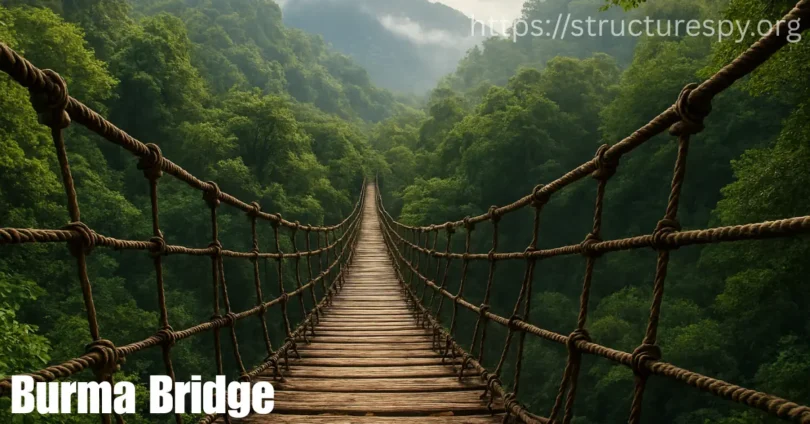
The Burma Bridge was first created for military use during the time of World War II. Soldiers used it to cross rivers, valleys and deep gaps in the forests of Burma, which is now called Myanmar. It was a simple bridge made with ropes and wooden planks, helping soldiers move safely in difficult areas.
Later, people found it exciting and started using it for fun and training in adventure camps. Today, it is a popular activity in parks, schools and army training centers, where it helps build courage, balance and confidence.
Structure and Design of the Burma Bridge
The Burma Bridge is made with a simple yet smart design that focuses on safety, balance, and fun. It is built using ropes, poles, and wooden planks that make it both strong and flexible.
- Main Rope: The strong rope stretched between two points where people walk.
- Side Ropes: Two ropes on each side for holding and balancing while walking.
- Support Poles: Fixed poles or trees used to tie the ropes tightly.
- Wooden Planks: Small wooden steps attached to the rope for easy walking.
- Safety Harness: A belt tied to the person for safety while crossing.
- Metal Hooks and Rings: Used to connect ropes and keep them tight.
- Base Platform: The starting and ending points made for standing safely.
The design of the Burma Bridge shows how a few simple materials can create an exciting and safe adventure experience for everyone.
How to Cross a Burma Bridge
Crossing a Burma Bridge can be fun and safe if done carefully. It needs focus, balance, and following simple steps.
- Wear Safety Gear: Always put on a harness and helmet before starting.
- Hold the Side Ropes: Grab both ropes on the sides for balance.
- Stand Straight: Keep your body upright and look forward.
- Step Slowly: Move one foot at a time on the rope or plank.
- Keep Calm: Take deep breaths and do not rush.
- Focus on Balance: Use your arms and side ropes to stay steady.
- Reach the End Carefully: Walk till the last plank, holding ropes firmly.
By following these steps carefully, crossing a Burma Bridge becomes a safe and enjoyable adventure.
Safety Rules Everyone Should Follow
Safety is very important while crossing a Burma Bridge to avoid accidents and enjoy the activity.
- Always Wear a Helmet: Protect your head from any accidental bumps.
- Use a Safety Harness: Attach yourself to the rope for security.
- Check the Ropes: Make sure all ropes and planks are strong and secure.
- Hold Side Ropes Firmly: Keep a strong grip while walking.
- Walk Slowly: Do not run or rush across the bridge.
- Listen to the Instructor: Follow all instructions carefully.
- Avoid Overcrowding: Only one or two people should be on the bridge at a time.
Following these safety rules makes crossing the Burma Bridge fun, safe and risk free.
Uses of the Burma Bridge
The Burma Bridge is not only for fun but also helps in training and learning important skills.
- Adventure Camps: Provides excitement and challenge for campers.
- Army Training: Helps soldiers practice balance, courage and focus.
- School and Scout Activities: Teaches teamwork, patience and confidence.
- Tourist Parks: Attracts visitors who love thrill and adventure.
- Fitness and Exercise: Strengthens muscles and improves coordination.
- Problem Solving Practice: Encourages thinking and planning while crossing.
- Leadership Training: Helps leaders guide and support teammates safely.
- Stress Relief: Fun activity that helps release tension and fear.
- Outdoor Education: Teaches nature awareness and survival skills.
- Confidence Building: Overcoming the challenge boosts self belief.
The Burma Bridge is useful for learning, training and having fun safely while gaining valuable life skills.
Benefits of Crossing a Burma Bridge
Crossing a Burma Bridge is not only fun but also helps improve both body and mind.
- Builds Courage: Facing the height and challenge increases bravery.
- Improves Balance: Walking on ropes develops better body control.
- Strengthens Muscles: Uses arms, legs and core muscles for movement.
- Enhances Focus: Requires attention and concentration while crossing.
- Teaches Patience: Moving slowly and carefully improves patience.
- Boosts Confidence: Successfully crossing gives a sense of achievement.
- Encourages Teamwork: Helps when friends guide and support each other.
- Reduces Fear: Gradually overcomes fear of heights and risks.
- Promotes Fitness: A fun way to stay active and healthy.
- Develops Coordination: Hands, feet and eyes work together effectively.
Crossing a Burma Bridge gives both fun and valuable physical and mental benefits.
Common Challenges and How to Overcome Them
Crossing a Burma Bridge can be tricky at first, but knowing the challenges makes it easier to succeed.
- Fear of Heights: Take deep breaths, focus on the bridge, and move slowly.
- Losing Balance: Hold side ropes tightly and keep your body straight.
- Slippery Planks: Wear shoes with good grip and step carefully.
- Strong Winds: Wait for calm weather or cross slowly while holding ropes firmly.
- Feeling Nervous: Practice on a lower or shorter bridge first.
- Fatigue or Tiredness: Rest before crossing and maintain steady breathing.
- Overthinking: Focus on one step at a time instead of looking too far ahead.
By understanding these challenges and following simple tips, crossing a Burma Bridge becomes safe and enjoyable.
Fun Facts About Burma Bridge
The Burma Bridge is not only adventurous but also has many interesting and surprising facts.
- Old Military Use: It was first used by soldiers in Burma (Myanmar) for crossing rivers.
- Adventure Popularity: Now it is a favorite activity in camps and parks worldwide.
- High Bridges: Some Burma Bridges can be more than 50 feet above the ground.
- Balance Challenge: Walking on it improves balance and coordination naturally.
- Speed Competitions: People sometimes compete to cross it fastest.
- Simple Materials: Made using only ropes, wooden planks and poles.
- Teamwork Skill: Often used in group activities to teach cooperation.
These fun facts make the Burma Bridge even more exciting and interesting to try.
Common FAQs About Bruma Bridge
Some faqs about Bruma Bridge:
What materials are used to make a Burma Bridge?
Besides ropes and wooden planks, sometimes metal cables or synthetic ropes are used for extra strength and durability.
How long does it take to cross a Burma Bridge?
It usually takes 3 10 minutes, depending on the bridge length and the person’s confidence.
Can children cross a Burma Bridge?
Yes, but only on shorter or lower bridges with supervision and proper safety gear.
Are Burma Bridges permanent or temporary?
They can be both some are fixed for long-term use, while others are set up temporarily for camps or events.
What weather is suitable for crossing?
Clear, calm weather is best. Heavy rain or strong winds can make crossing dangerous.
Can it hold more than one person at a time?
Some bridges are designed for two or three people, but most are safest with one person at a time.
Is training required before using a Burma Bridge?
Basic guidance or short practice is recommended, especially for first timers, to learn balance and rope handling.
Are there indoor Burma Bridges?
Yes, many adventure gyms and indoor parks install small Burma Bridges for practice and fun.
Can adults also enjoy Burma Bridges?
Absolutely! They are suitable for adults of all ages, providing fitness, challenge and entertainment.
Are there competitions using Burma Bridges?
Yes, some adventure camps and scout events organize timed competitions to see who can cross the bridge fastest.
Conclusion
The Burma Bridge is more than just a fun adventure. It helps build courage, balance and confidence while teaching important life skills like patience, focus and teamwork. Whether used in camps, schools army training, or parks, it offers excitement and valuable physical and mental benefits.
By following safety rules and understanding its design, anyone can enjoy crossing the Burma Bridge safely and confidently, making it a memorable and rewarding experience.